Money & Markets
The Secret Books
The bank that financed the Renaissance kept two sets of books. The public ones satisfied the Church's usury laws. The libri segreti, the secret ledgers with the real numbers, stayed hidden for four and a half centuries.
Florence, 1397–1494 & 1950 · The Medici Bank
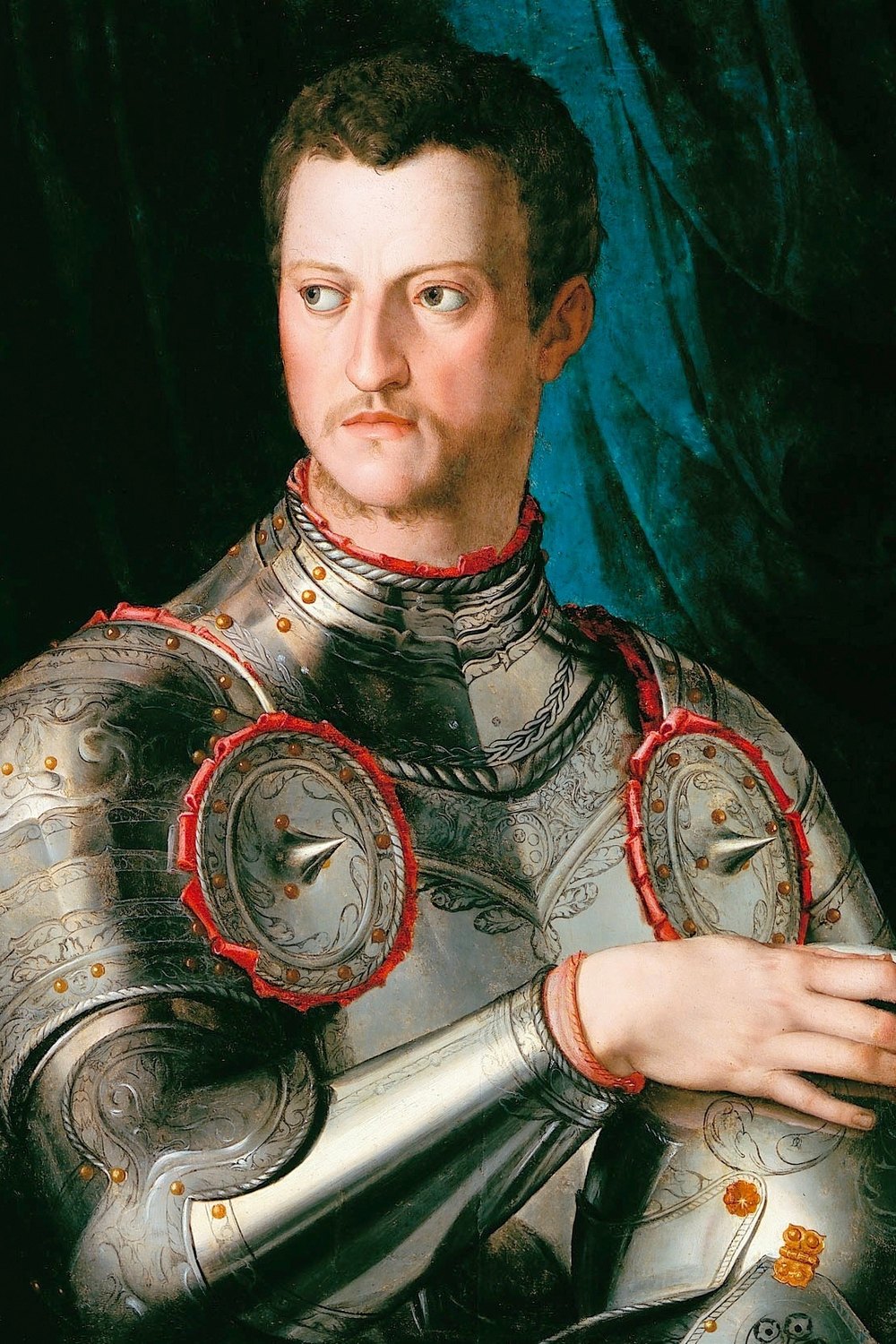
What actually happened
The Medici bank's genius was structural: interest reinvented as 'discrezione' (a gift at the lender's discretion), profits routed through exchange-rate spreads on bills of exchange, and partnerships firewalled city by city so one branch's collapse couldn't sink the rest. It was a holding-company logic centuries early.
When the libri segreti surfaced in the Florentine archives around 1950, Raymond de Roover reconstructed the whole machine: which popes owed what, which branches secretly carried the losses the public books never showed, and how the bank's slow rot under Lorenzo tracked exactly what the hidden numbers said and the public ones concealed.
The bank died in 1494; the truth about it was published in 1963.
The longer arc
The bank began small: Giovanni di Bicci de' Medici split off from a cousin's Rome banking business in 1397 and moved the operation to Florence, building the branch-partnership structure, each city office separately capitalized so one branch's bad debts could not sink the whole network, that let his descendants finance popes, kings, and the Florentine Renaissance itself. Cosimo de' Medici expanded it into Europe's largest bank by the mid-1400s, using its profits to buy the political dominance the family is remembered for.
The decline under Lorenzo de' Medici in the late 1400s was already visible in the hidden ledgers before it became visible in the streets: branch managers concealed bad loans to princes who never repaid, and by 1494 the bank was hollow. That was the year French troops under Charles VIII invaded Italy and Florence's citizens, egged on by the friar Savonarola, expelled the Medici and seized the family's remaining assets, ending both the dynasty's rule and the bank in the same year. Raymond de Roover, an economic historian at Harvard Business School, published his reconstruction of the secret books in 1963, nearly 470 years after the collapse they explained.
The play to remember
The play.
Every institution has public books and real books.
The gap between them is the actual business model.
Was this interesting?
Select an option to vote. You can change it anytime.
Recommended for You
Friday the 13th, 1307
The Knights Templar ran Europe's first international bank: deposit in London, withdraw in Jerusalem by letter of credit. Their biggest debtor was the King of France. On a single Friday morning, he erased the debt by…
The Receipt
In 1519 the crown of the Holy Roman Empire went to auction between kings, and the winning bid came from a commoner. Four years later, with the emperor stalling on the debt, Jacob Fugger sent him what history remembers…
The Match King
By 1929 Ivar Kreuger controlled two-thirds of the world's match production and was lending sovereign nations more money than J.P. Morgan. A meaningful part of the collateral was $100 million of Italian government bonds…
The Locked Library
In the autumn of 1907, with banks failing and no central bank existing, one private citizen reportedly kept the heads of American finance in his library until dawn, until they pledged the money to stop the run. One of…

Newton's Madness
Isaac Newton sold his South Sea Company shares in April 1720 at a solid profit. Then he watched the bubble triple without him, bought back in near the top, and lost a fortune, around £20,000, a lifetime of income.
Tired of Fighting
Jesse Livermore shorted the 1929 crash and, by the widely reported figure, made around $100 million while the country broke. America blamed him for it. Eleven years later he died broke by his own hand, leaving a note…
Account 88888
A 28-year-old trader ran both Barings' Singapore trading desk and the back office that checked it. His hidden error account, 88888, swallowed losses for three years, until the 233-year-old bank that financed the…
No Millionaires at the Reunion
When Cornelius Vanderbilt died in 1877 he was worth more than the US Treasury held. In 1973, one hundred twenty of his descendants gathered for a family reunion, and by the family chronicler's account, not one of them…
The Bridge and the Bricks
In June 1982 the chairman of Italy's largest private bank was found hanging under Blackfriars Bridge in London, bricks and £10,000 in his pockets. Ruled suicide. Twenty years later the forensics were redone, the ruling…
New cases drop daily on  TikTok and
  Instagram. One case a day, one model you can retell.