How Philip IV erased the Knights Templar's debt
Why did Philip IV move against the Templars?
Philip IV of France, Philip the Fair, spent the 1290s and early 1300s fighting. War with England over Gascony. War with Flanders, including the humiliation at the Battle of the Golden Spurs in 1302. Wars cost silver. When the silver ran short he debased the coinage, which is a polite way to say he made the money worse so he could mint more of it. In 1306 he expelled Jews from the royal domain and seized what they held. He was still in debt to the Templars.
That last part is the mechanism, not color. By the late 1200s the Knights Templar were not only a crusading order. Papal privileges, especially the bull Omne Datum Optimum in 1139, had exempted them from local taxes and from bishops, and let them operate across borders as one legal body. Donations of land and cash piled up. They ran a network that let a pilgrim deposit in one city and withdraw in another by letter of credit. The Paris Temple functioned as a de facto treasury for the French crown. Philip's biggest independent creditor was also his banker, and it answered to the pope, not to him.
The 90-second version of this story is the case file. This page is the companion: why the arrest was possible, what the charges were for, and which parts of the popular retelling you should not repeat.
Was it really about the debt?
Most modern historians treat money as a real motive, not the only one. Philip had already shown he would crush a wealthy, legally separate group when he needed cash; the 1306 expulsion is the prior. He had also spent years fighting papal authority, including the 1303 attack on Pope Boniface VIII at Anagni, directed by his minister Guillaume de Nogaret. The Templars were a stateless army with their own courts, their own revenue, and a headquarters in his capital. A king who wanted a tighter grip on both money and the Church had more than one reason to break them.
What you should not do is pick a single cartoon. "He did it for the gold" skips the politics. "He did it because they were heretics" takes the indictment at face value. The charges, heresy, idolatry, spitting on the cross, secret rites, were drafted in advance of the arrests. They are the legal tool. Debt plus a rival jurisdiction is the incentive. Both can be true. The case file presents both readings; I am not going to flatten them here to make a tidier dinner story.
A specific figure you will see online, that the debt had reached the equivalent of eight tonnes of silver, or some neat percent of royal revenue, I could not pin to a primary source I trust. Treat round numbers like that as later reconstruction unless you have the account book in front of you.
What happened on Friday 13 October 1307?
On 14 September 1307 Philip sent sealed orders to bailiffs and seneschals across the kingdom, not to be opened until the night of 12 October. At dawn on Friday 13 October, royal officers arrested Templars found in France, including Grand Master Jacques de Molay at the Paris Temple. Coordinated national arrests in an age of horseback messengers. The surprise was the point. A creditor you arrest in bed cannot move the money.
Clement V, the pope Philip could reach, was furious at first: the Templars answered to him, not to a king. On 22 November 1307 he issued the bull Pastoralis praeeminentiae, ordering other Christian monarchs to arrest Templars and seize their property in the name of the Church. That turned a French police action into a European one. Confessions followed, many under torture, many later recanted. In 1310, dozens of Templars who had withdrawn their confessions were burned in France.
The Chinon Parchment, dated 17 to 20 August 1308 and rediscovered in the Vatican archives in 2001 by the paleographer Barbara Frale, records that three cardinals acting for Clement absolved de Molay and other leaders of heresy and restored them to the sacraments. The pope then still suppressed the order. Absolution and abolition in the same file. That is the kind of split a fact-flag is for.
Did Friday the 13th come from the Templars?
No. Friday 13 October 1307 is a real date. The Western superstition that Friday the 13th is unlucky is not a medieval memory of that raid. National Geographic walked through this in 2016: Dan Brown helped popularize the link, and it is a modern story stuck onto a real arrest. Friday as an unlucky day and 13 as an unlucky number each have older roots. The combined date-fear shows up in the late 19th century. Thomas W. Lawson's 1907 novel Friday, the Thirteenth is a marker, not a medieval chronicle.
If you retell this case at dinner, skip the origin-myth. The interesting part is not that a king picked a spooky calendar square. It is that he used sealed orders, a heresy charge, and a pope he could pressure to delete a bank he could not tax.
What happened after the arrests?
On 22 March 1312, at the Council of Vienne, Clement issued the bull Vox in excelso. It abolished the Order of the Temple, its habit, and its name. The bull talks about scandal, rumor, and the difficulty of stopping the damage while the order still existed. It is not a clean guilty verdict. It is a suppression "for the good of the Church," written under French pressure. In May 1312 the bull Ad providam assigned Templar property to the Knights Hospitaller. Philip extracted compensation for the cost of the proceedings. Handover dragged for years. Monarchs skimmed first.
In March 1314 Jacques de Molay was burned in Paris after recanting. Legend says he cursed king and pope, and both were dead within the year. Clement V died in April 1314. Philip IV died in November 1314. The deaths are real. The curse is a later story. Portugal took a different path: in 1319 it folded Templar holdings into the Order of Christ, same men, same buildings, same wealth, new badge. That fortune later helped fund Portuguese voyages down the African coast. Templar money, rebranded, still moved ships.
The play to remember is the one on the case file. A debt is only as safe as the creditor is powerful. Lending to your sovereign means your sovereign can erase you. For the short version, read Friday the 13th, 1307. For more files in the same vault, start at the case files.
Quick answers
Why were the Templars destroyed?
Philip IV of France had them arrested on 13 October 1307 on charges of heresy. He was in debt to the order, which had been acting as a Church-exempt bank inside his kingdom. Pope Clement V dissolved the order in 1312. Money and royal control both belong in the answer; the heresy charges were the legal tool.
Is Friday the 13th unlucky because of the Templars?
No. The arrests really did fall on Friday 13 October 1307. Historians treat the link to the modern superstition as a later invention, popularized in the 20th century, not a medieval tradition.
Did Jacques de Molay curse Philip IV?
That is legend. De Molay was burned in Paris in March 1314. Clement V and Philip IV both died later that year. The deaths are documented. The curse is a story people added.
Philip IV ordered mass arrest of Templars in France at dawn on Friday 13 October 1307, after sealed orders dated 14 September 1307 -> https://en.wikipedia.org/wiki/Trials_of_the_Knights_Templar
Philip IV fought England and Flanders, debased coinage, expelled Jews from the royal domain in 1306, and was in debt to the Templars, who had acted as a financial agent of the French crown -> https://en.wikipedia.org/wiki/Philip_IV_of_France
Omne Datum Optimum (1139) granted the Templars papal protection and exemptions that let the order operate across borders -> https://en.wikipedia.org/wiki/Omne_datum_optimum
Pastoralis praeeminentiae (22 November 1307) ordered Christian monarchs to arrest Templars and seize their property in the name of the Church -> https://en.wikipedia.org/wiki/Pastoralis_praeeminentiae
Chinon Parchment, 17-20 August 1308, records papal envoys absolving Jacques de Molay and other Templar leaders of heresy; rediscovered in 2001 by Barbara Frale -> https://en.wikipedia.org/wiki/Chinon_Parchment
Vox in excelso, 22 March 1312, suppressed the Order of the Temple at the Council of Vienne; Ad providam assigned property to the Hospitallers -> https://en.wikipedia.org/wiki/Vox_in_excelso
Friday the 13th superstition is not a medieval memory of 1307; the Templar origin story is modern, and Thomas W. Lawson's 1907 novel is a marker of the combined date-fear -> https://www.nationalgeographic.com/culture/article/160512-friday-13-knights-templar-superstition
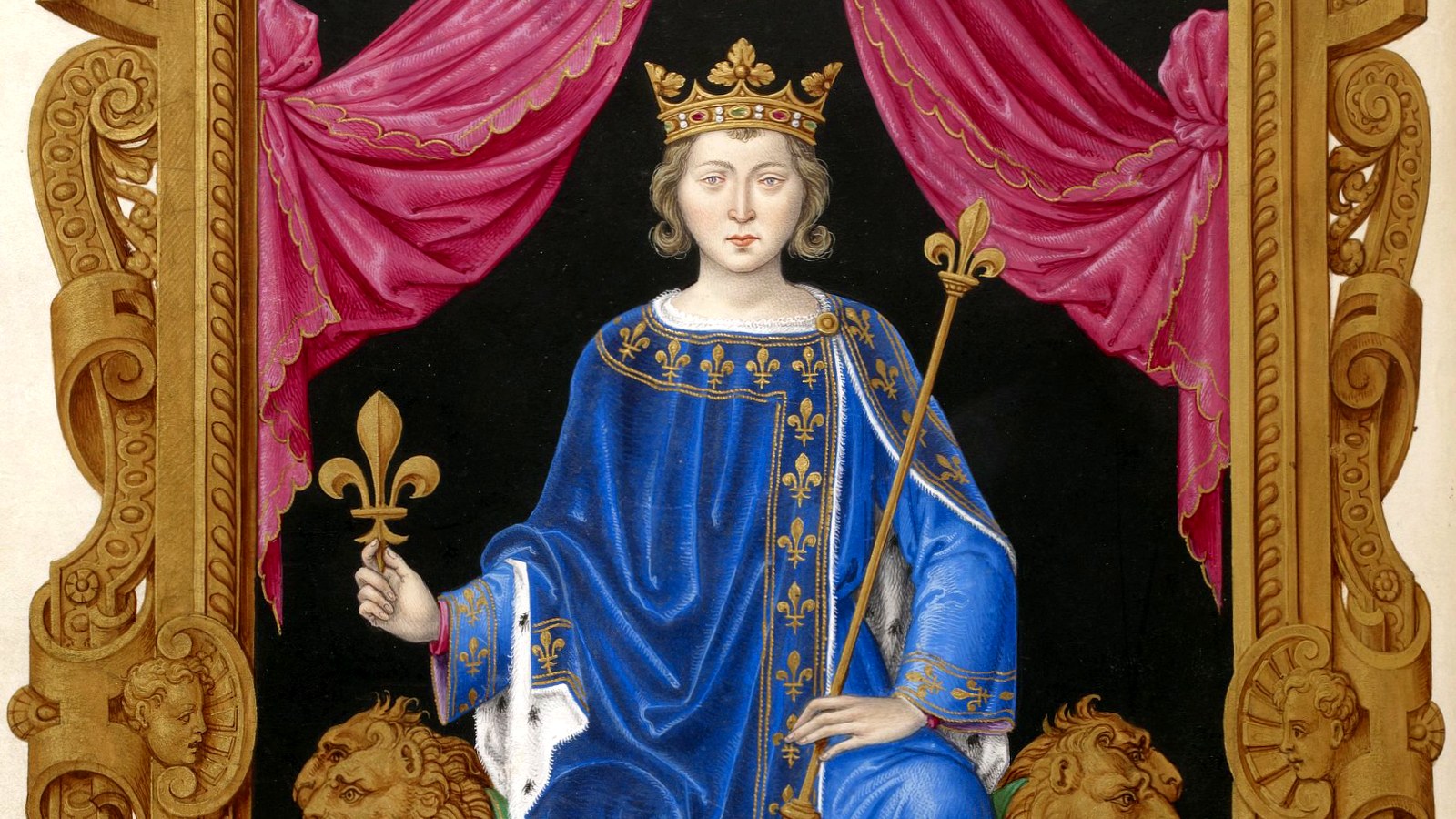
Cover image: Philippe IV le Bel from Jean Du Tillet, Recueil des rois de France, 16th century, public domain -> https://commons.wikimedia.org/wiki/File:Philippe_IV_le_Bel.jpg
New cases drop daily on TikTok and Instagram.
Tomorrow's case goes to the Founding 200.
Get the story you can retell